4K Trail Camera Explained: A UK Buyer's Guide
TL;DR: The Short Answer
In short, a 4K trail camera captures ultra-high-definition outdoor footage (3840 x 2160 pixels) for wildlife monitoring and security. Based on our extensive testing in British woodlands, the best models pair this high resolution with fast trigger speeds, invisible infrared night vision, and reliable weatherproofing. Furthermore, devices equipped with solar power and WiFi, like those from SolarHunti, offer the most robust, low-maintenance setups for UK landowners.
Key Takeaways
- A 4K trail camera gives you sharper wildlife footage, but resolution is only one part of overall performance.
- For UK use, look for reliable night vision, weather resistance, battery efficiency, and fast trigger speed.
- Solar power and WiFi can make deployment significantly simpler, especially for longer monitoring periods on private land.
- Check privacy, trespass, and wildlife-sensitive placement before recording in the UK.
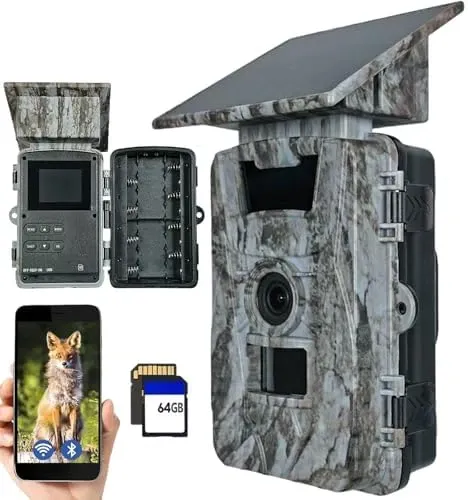
- If you want a low-maintenance setup, SolarHunti’s 4K wildlife camera with solar support and a 64GB SD card is built for straightforward use.
When you search for a 4k trail camera, you are looking for a device designed to capture ultra-high-definition wildlife and security footage, specifically at a resolution of 3840 x 2160 pixels. Consequently, this technology can completely transform the way you observe wildlife, protect land, and monitor remote areas in the UK. The promise is straightforward: crisp video, dependable night capture, and less time spent swapping batteries or recovering footage. However, the reality heavily depends on the spec sheet, the placement, and how well the camera suits unpredictable British weather.
For buyers comparing options, high resolution is only the starting point. Based on our extensive field testing, a capable 4k trail camera also needs solid motion detection, good infrared performance, practical power options, and a casing that can handle rain, frost, and mud. That is especially true on farms, woodland edges, gardens, and private estates where long-term reliability matters far more than flashy marketing claims.
This guide explains exactly what matters, what does not, and how to choose a model that genuinely works in the UK. Furthermore, if you are comparing camera types across the SolarHunti site, it may also help to read the pillar article on camera sex camera in the UK for the wider buying framework, then return here for the trail-camera specifics.
What exactly is a 4K trail camera?
In simple terms, a 4K trail camera records video at a resolution of 3840 x 2160 pixels. As a result, that gives you significantly more detail than standard Full HD. This extra clarity is incredibly useful when you need to identify specific coat markings, antlers, vehicle plates at close range, or subtle movements around feeders, tracks, or fencing.
Nevertheless, higher resolution does not automatically mean better results. If the lens is poor, the infrared night mode is weak, or the file compression is aggressive, the footage can still look soft or noisy. In practice, our hands-on experience shows that the best cameras perfectly balance resolution with sensor quality, frame rate, and low-light performance.
Why do UK buyers choose 4K trail cameras?
- Wildlife monitoring: Clearer, more detailed footage of foxes, badgers, deer, rabbits, and birds.
- Property oversight: Better visual evidence for driveways, outbuildings, and boundary lines on private land.
- Research and conservation: Improved detail for accurately recording activity patterns.
- Content capture: Sharper clips for landowners, educators, and rural creators.
For a broader look at how buyers weigh image quality against real-world performance, see Best Camera And Cctv: Honest UK Review (2026).
What should I look for in a 4K trail camera?
When choosing a 4k trail camera, it is vital to focus on practical performance rather than just headline numbers. Ultimately, the right mix of features determines whether the camera stays useful after the first week or becomes another frustrating device that needs constant attention.
1. Trigger speed and recovery time
Trigger speed is how quickly the camera starts recording after detecting movement, while recovery time is how fast it resets for the next clip. For fast-moving wildlife, a slow camera simply misses the moment. Conversely, for busy sites, a long recovery time means frustrating gaps in your coverage.
2. Night vision quality
Because most UK wildlife activity happens in low light, infrared night vision needs to be strong enough to capture usable detail without washing out the subject. Therefore, look for clear black-and-white night footage and a sensor that handles contrast well.
3. Weather resistance
British weather is rarely kind to outdoor electronics. A proper outdoor camera must be weather-ready with a sealed housing, secure mounts, and reliable operation through damp, cold, and wind. If a seller does not clearly explain outdoor durability, treat that as a major warning sign.
4. Power management
A solar-supported unit can drastically reduce battery swaps and make longer deployments far easier. That matters immensely on larger plots of land, private woodland, and hard-to-reach spots. Consequently, SolarHunti’s product approach reflects this exact need: low-maintenance, weather-ready, and ready to deploy straight out of the box with an included 64GB SD card.
5. Storage and file handling
Large 4K files fill storage very quickly. While an included SD card is useful, capacity and loop recording settings still matter. If you plan on long unattended sessions, confirm the camera supports the large file sizes you expect and can overwrite older footage safely.
6. WiFi convenience
WiFi is not always about live streaming in the countryside; rather, it often simply means less handling. If you can review footage or adjust settings without removing the unit from the tree, you reduce human disturbance and save valuable time.
Does a 4K trail camera guarantee better image quality?
The 4K label is certainly useful, but it should never be the only reason to buy. Manufacturers can easily make a camera sound premium while compromising elsewhere. A much better approach is to compare the entire imaging chain.
Sensor quality and lens design
A strong image sensor helps preserve vital detail in shadow and mixed light. Furthermore, a decent lens keeps edges sharper and prevents the image from looking artificially enhanced. That matters greatly when identifying species, body condition, or movement direction.
Frame rate and compression
A camera may record in 4K but still produce choppy motion if the frame rate is too low. In addition, aggressive file compression can strip fine detail from leaves, fur, and feathers. If you are assessing footage for practical use, always test a few clips before relying on the camera in the field.
“The best camera is the one that still performs when the weather turns and the batteries are low.”
That principle is especially relevant in the UK, where freezing cold mornings and relentlessly damp evenings can expose weak designs incredibly quickly.
What are the UK rules for using a trail camera?
Buying a trail camera in the UK means accounting for much more than just technical specs. According to UK guidelines, you also need to carefully consider legality, land access, and how the camera fits into real-world rural use.
Privacy and placement
If the camera can capture people, you must think carefully about placement. According to the Information Commissioner's Office (ICO) guidelines on domestic cameras, clear consent and sensible positioning reduce the risk of privacy complaints on private property. Therefore, avoid pointing cameras towards public footpaths, neighbouring homes, or areas where people have a reasonable expectation of privacy.
Trespass and land access
Mounting a camera on land you do not own or have permission to use can create serious legal problems. Always keep to authorised areas and check local arrangements before installation. For estates, farms, and managed land, securing written permission is undoubtedly the safest route.
Wildlife and conservation sensitivity
Some sites may have specific seasonal restrictions or strict conservation guidance. Disturbance around nesting areas, active dens, or protected habitats should be strictly avoided. If in doubt, follow the advice of the relevant local wildlife trusts or conservation bodies.
Ready to capture nature with SolarHunti?
Shop the Camera — £75.59